
Rasa Tower is the first building in Thailand to receive the latest version of LEED O+M Platinum certificate.
19 March 2024
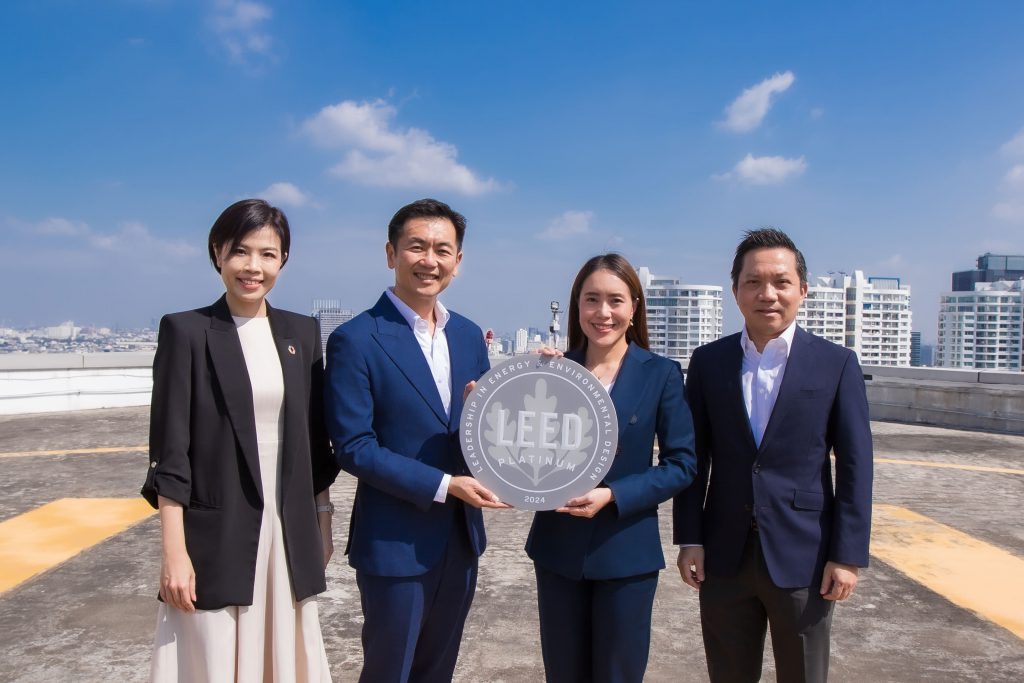
Bangkok, Thailand – March 5, 2024 – Mr. Wachirachai Koonamwattana, Head of Smart System Solution Business, SCG, extended his congratulations to Rasa Tower Co., Ltd., under the leadership of Mrs. Wikunya Asavanich, Deputy Chief Executive Officer, during the prestigious LEED (Leadership in Energy and Environmental Design) Green Building Standard Plaque Award Ceremony. This accolade marks Rasa Tower as the first recipient of the LEED v4.1 O+M Platinum certification among office buildings in Thailand. The endeavor underscores a collective commitment to managing, maintaining, and enhancing the performance of existing facilities to align with evolving sustainability standards, with SCG Building and Living Care Consulting providing invaluable expertise as the consulting firm for this milestone certification.

Rasa Tower is a Grade-A office complex boasting a sprawling usable area exceeding 76,000 square meters, embarked on a journey to elevate its building standards to the latest LEED version. This updated certification places heightened emphasis on comprehensive performance metrics and emissions reduction strategies, while prioritizing occupant well-being. Such efforts reaffirm Rasa Tower’s dedication to enhancing the quality of life for its occupants and optimizing building performance.
SCG Building and Living Care Consulting Co., Ltd., as a consultant for sustainable and healthy building design, analyzed performance data, calculated cost-effectiveness and return on investment, and developed solutions tailored to the project. Rasa Tower was able to pass the criteria in 5 main areas:
- Implementation of efficient energy management protocols resulting in up to 40% energy savings compared to conventional buildings.
- Adoption of water-saving sanitary ware to curtail water consumption beyond industry norms.
- Implementation of waste segregation initiatives at the source coupled with an educational campaign to ensure proper waste management practices among building users.
- Leveraging its strategic location near public transit, enabling over 35% of occupants to commute via electric trains and other public transportation, thereby reducing reliance on private vehicles and subsequent carbon emissions.
- Implementation of robust indoor air quality management strategies to mitigate PM2.5 pollutants and carbon dioxide levels within the building.